These market insights open on a week where the shooting stopped before the argument did. Over the weekend the United States and Iran both held fire, and global markets answered with a relief rally that felt more like a held breath than a celebration. Energy prices fell, the dollar eased, and traders began cutting positions built for a longer war. A pause is not a peace deal. From there the calendar turns brutal: the Federal Reserve, the Bank of England and the Bank of Japan all decide policy inside five sessions, while the largest technology businesses in the world report revenues in between. Here are the assets, events and risks that decide it.
Quick Summary Box
The tone entering the week is relief without confidence. Gold is lifting off a deep low as cheaper energy eases pressure on central banks, though its direction stays hostage to Wednesday’s Fed. Crude is the mirror image, handing back its war premium as lanes reopen. Equities are torn between a strong earnings season and anxiety over how much the biggest technology names are spending on generative ai. The dollar was the quiet winner of the inflation scare and now faces its first test. Across global markets the pattern repeats: positions built for escalation are being cut fast, and the data later in the week decides whether that unwind holds.
Asset Breakdown: Market Research on Global Markets
Every level below comes from live pricing and published market research. The comprehensive methodology is simple: price action, central bank guidance and the latest insights from institutional desks, combined into one comprehensive view per asset. The aim is actionable intelligence you can size around, not a quarterly market update you skim, highlighting where analysts disagree because a deep understanding of that disagreement beats the consensus.
XAUUSD (Gold)
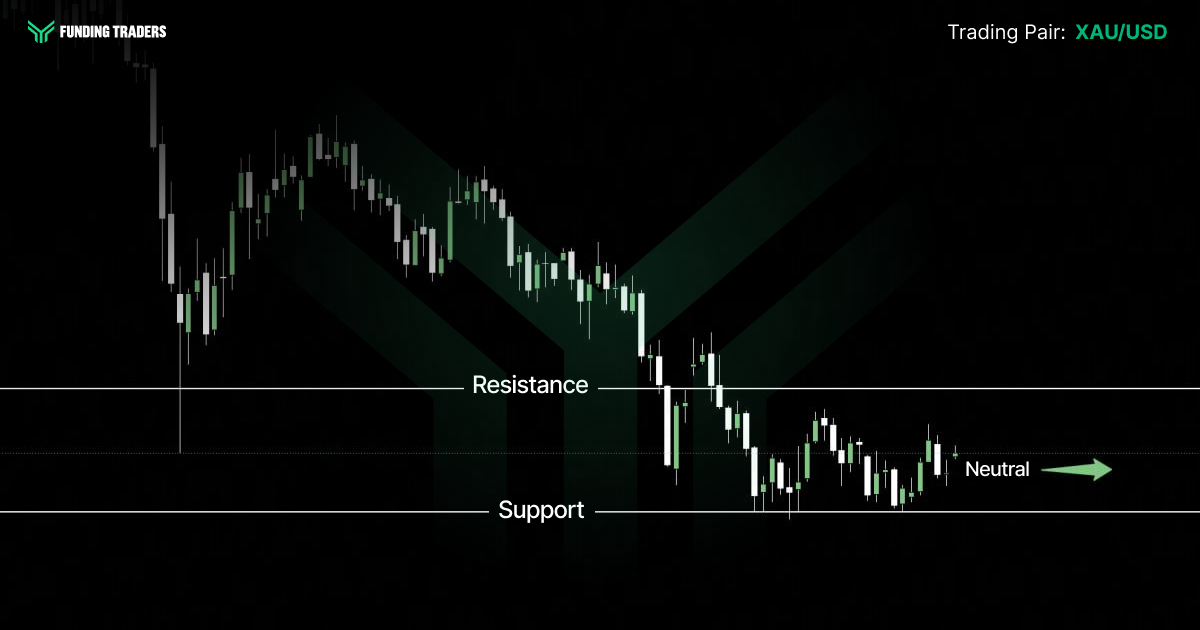
Gold closed last week near $4,043 an ounce and opened Monday around $4,090, up roughly one percent off nine-month lows. The oddity worth understanding is that a Middle East war made gold cheaper, not dearer: higher crude lifted inflation, inflation lifted US yields, and rising yields raised the cost of holding an asset that pays nothing. Safe haven logic ran backwards for a month, leaving the metal more than twenty-five percent below January’s record near $5,600.
Support at $4,000 has been defended repeatedly, with $3,960 the line that ends the base; resistance runs $4,155 to $4,165, then $4,250. Forecasts diverge sharply: Goldman Sachs cut its year-end target to $4,900 and flags $4,400 if the Fed hikes, UBS sees $4,400 by September, HSBC trimmed its 2026 average to $4,560, and RBC calls $4,000 a mostly firm floor. Central bank buying keeps a bid underneath.
Gold’s floor is a level, not a guess, and levels are tradeable when real capital sits behind them. Code HEAT takes 50% off any 1-Step or 2-Step Challenge.
EUR/USD
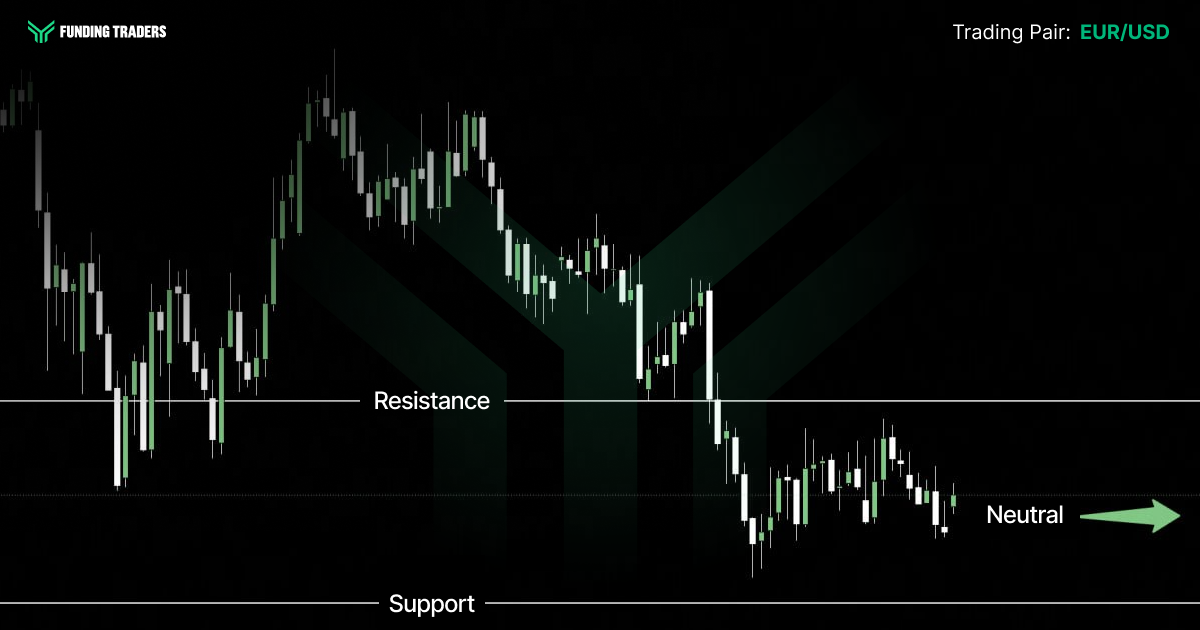
EUR/USD spent Friday pressing either side of 1.1400, well down from this year’s 1.20 high. The European Central Bank left its deposit rate at 2.25% on 23 July in a hawkish hold, with a September move under consideration. Eurozone inflation eased to 2.8% in June, but July’s flash PMIs beat across the board, so the disinflation story is not clean.
Both central banks now lean the same way, which is why the rate-divergence trade that drives this pair has gone quiet. Thursday’s flash GDP is the cleanest read on economic growth in the bloc; Friday’s flash inflation decides whether September tightening stays priced. JPMorgan projects 1.15 by September, UBS 1.12.
GBP/JPY
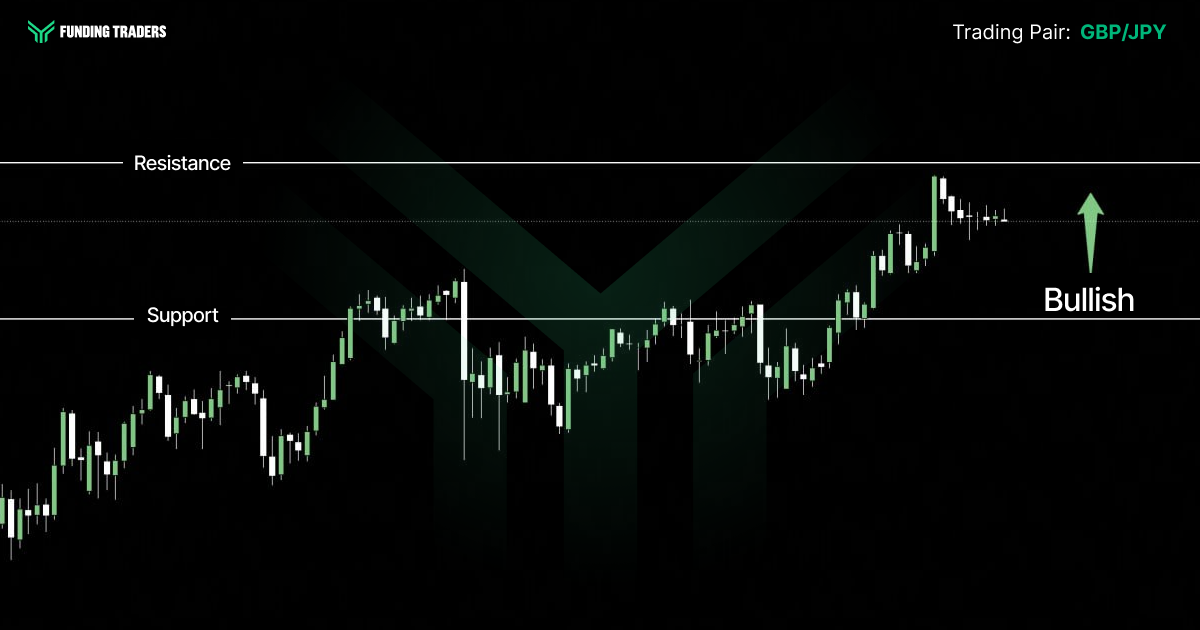
GBP/JPY traded near 218 into the weekend, holding above its 50-day and 100-day averages. The rate gap does the heavy lifting, and both legs report this week. The Bank of England held at 3.75% in June on a 7-2 vote, with Huw Pill and Megan Greene preferring a hike. UK data since cut both ways: headline inflation eased to 2.6% with core stuck at 2.6%, while employment rose 148,000 against an 85,000 forecast.
A hold on Thursday is the base case, but the Monetary Policy Report sets the tone, and markets price two 25 basis point hikes in November and December.
USD/JPY
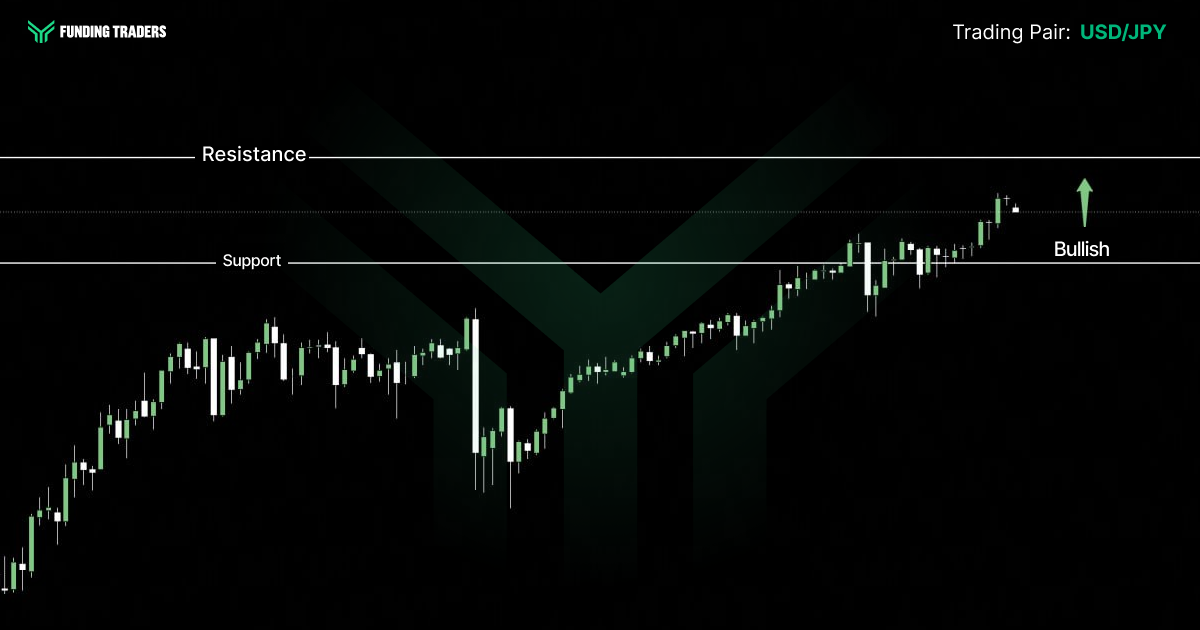
The yen touched a fresh forty-year low near 163.99 before settling around 163.78 on Friday. Japan’s finance ministry has repeated that it stands ready to act decisively against excessive moves, and desks flag 162 to 163 as the sensitive zone, though intervention buys time rather than reversing a trend.
Friday’s decision and quarterly outlook report carry the highest volatility payoff on the board precisely because expectations sit so low: money markets price roughly a 96% chance of no change and no hike until December. Speculative yen shorts remain deeply built, so the weaknesses here sit in positioning, not fundamentals.
USD/CHF and AUD/USD
USD/CHF traded near 0.8070 through mid-July and firmed with the dollar into Friday’s close. The Swiss National Bank is pinned at zero and has said its willingness to intervene should stay elevated. Analysts see 0.7950 as a third-quarter target; a delivered Fed hike pushes the call toward 0.83.
AUD/USD sits near 0.6973, constructive above its 200-day average near 0.6890. Wednesday’s Australian inflation print is the week’s most underrated release: consensus looks for headline inflation at 4.1% and a trimmed mean near 3.8%, with the cash rate at 4.35%. A hot core reading would expose every short-Aussie position built this month.
WTI Crude Oil
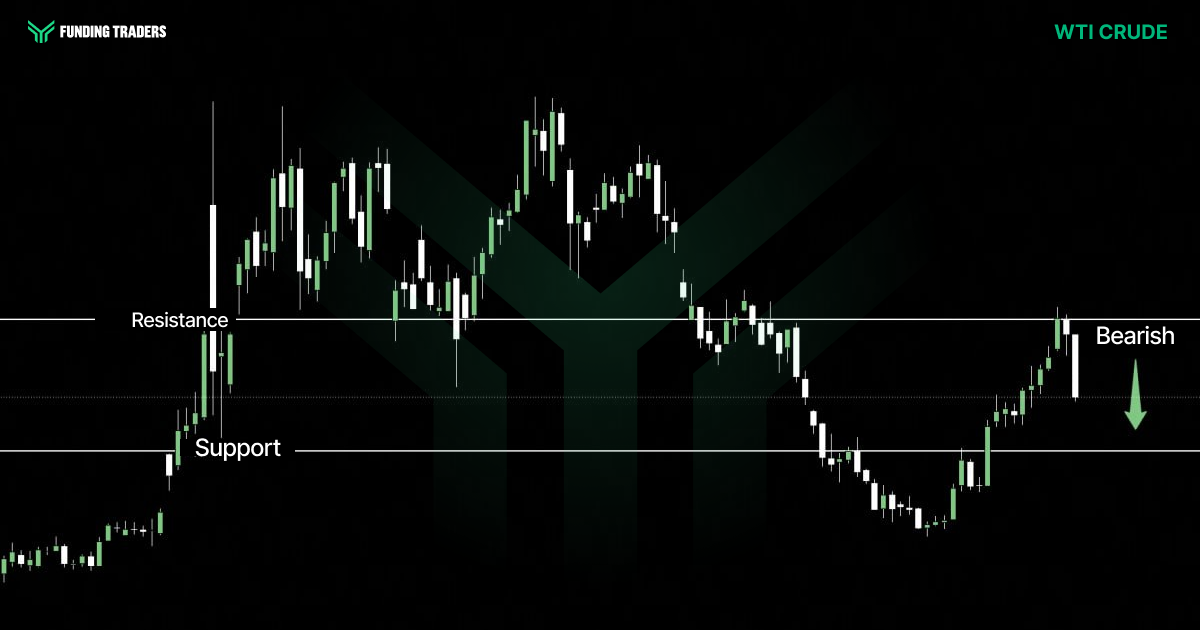
WTI closed Friday near $91.62 after surging twelve percent in five sessions and thirty-two percent across the month, with Brent clearing $102 for the first time since May. Then the pause landed: Brent fell as much as seven percent to under $90 before recovering half, and WTI opened near $84.65.
The plumbing explains the volume of premium involved. The Strait of Hormuz carries close to a fifth of the world’s oil and LNG, and with the Bab el-Mandeb accounts for around twenty-seven percent of global energy supply. Houthis have claimed attacks on Saudi targets in the Red Sea, the alternative route, and the prevailing read among desks is that this pause looks tactical, not genuine.
Goldman Sachs models Brent near $80 in the fourth quarter but warns it could top $120 if Hormuz stays disrupted; JPMorgan sees $86 this quarter, Morgan Stanley $75, Citigroup $70. Every one of those predictions is a headline away from being rewritten.
Key Economic Events: July 27 – July 31 (GMT+3)
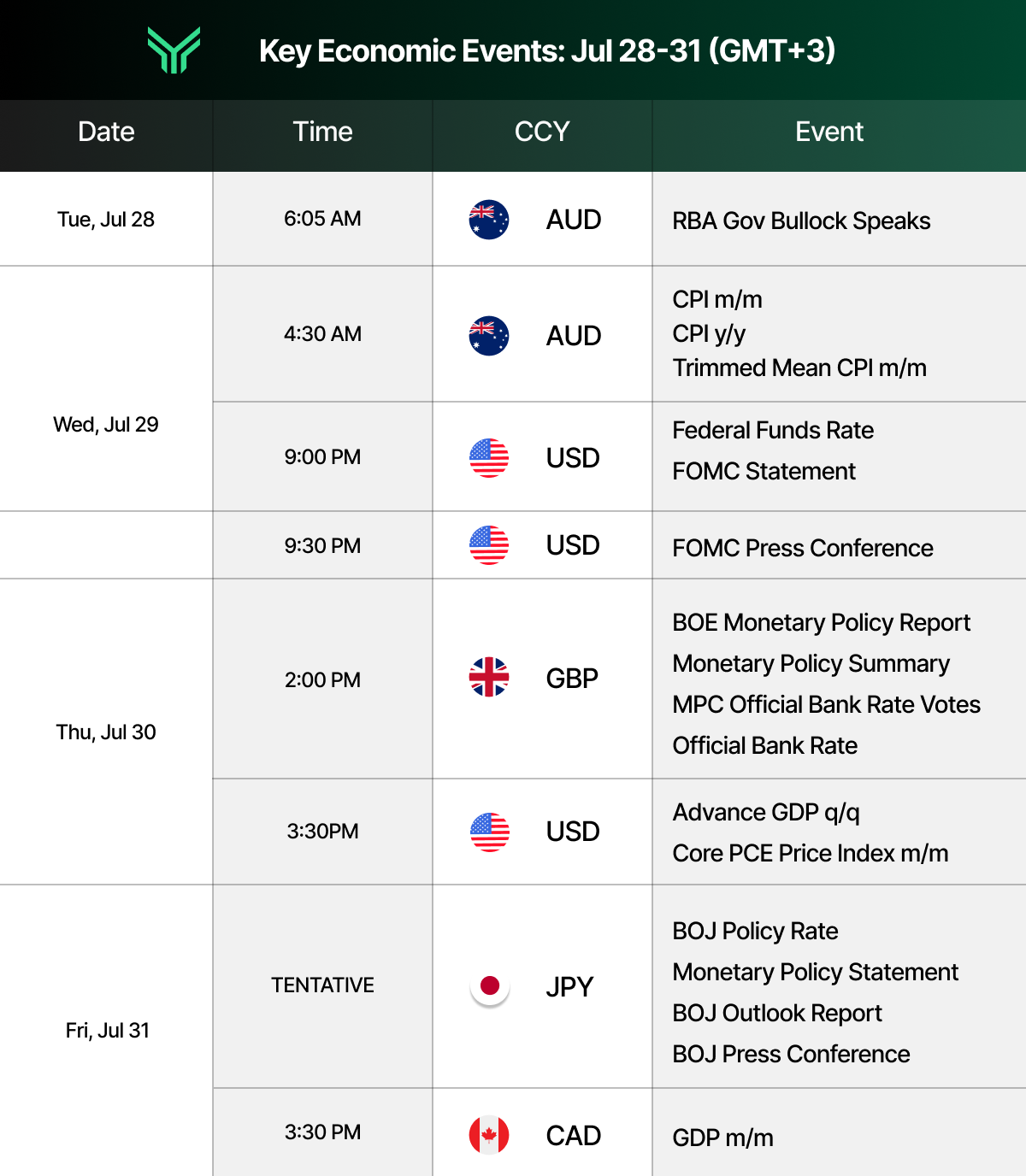
This condensed calendar is adapted from the Forex Factory economic calendar at forexfactory.com, a leading resource professional traders use to track market‑moving macro news and central bank events in real time.
Asset Watchlist: Market Intelligence Snapshot
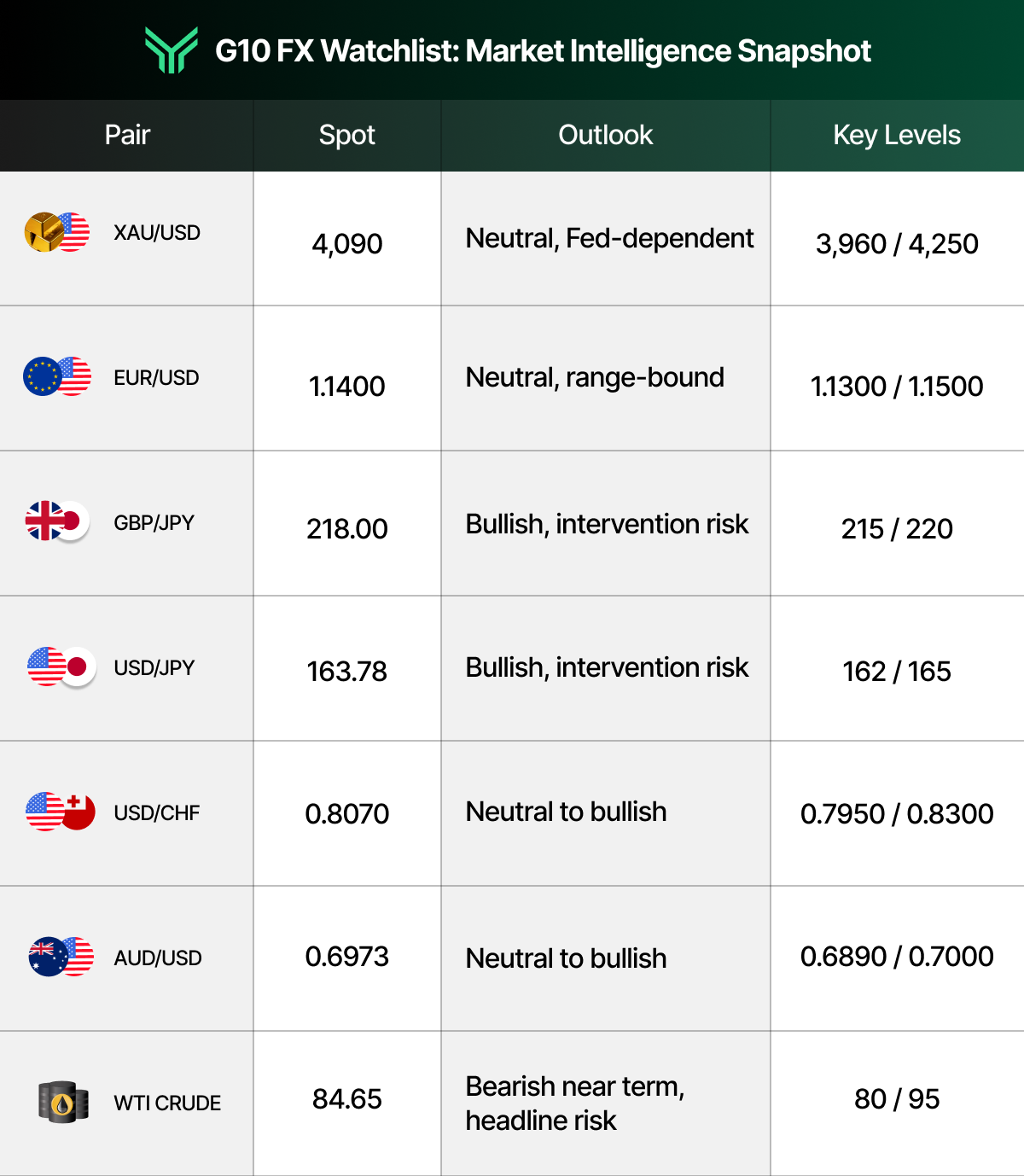
All levels are drawn from current technical research and are reference points, not guarantees.
Actionable Insights for the Week to Drive Growth
Preparation is the only edge that survives a week like this. A trader who mapped both outcomes before Wednesday evening is executing a plan, not reacting to a headline.
Phase One is the base case: the Fed holds, the statement stays hawkish, and the Gulf pause survives the week. Markets price only a 34% chance of a hike, so a hold with two or three dissents is likely. Gold then stays trapped between $4,000 and $4,165, EUR/USD grinds inside its band, USD/CHF holds its bullish structure, and AUD/USD stays constructive above 0.6890 unless Wednesday’s trimmed mean disappoints.
Phase Two is where the money is. A delivered hike sends the dollar sharply higher, breaks EUR/USD support, forces gold through $4,000 and hands USD/CHF the 0.83 handle. Renewed strikes on Gulf energy infrastructure send Brent back above $100 and reverse the relief rally. A hawkish Bank of Japan surprise on Friday carries the highest payoff given how little tightening is priced, and weak capital expenditure guidance from any of the four megacaps takes the index lower.
Phase Two setups reward traders who are already funded when the trigger fires, not the ones still deciding. HEAT gives 50% off 1-Step and 2-Step Challenges; WAVE gives 40% off Instant Funded accounts.
Two habits separate traders who gain from a week like this from those who merely survive it. First, analyze the calendar before the week starts: a timely economic calendar and a written plan for each release will inform more decisions than any indicator. Second, explore perspectives that contradict your own and note where the depth of the order book thins around leading releases. Institutional research is free to access, and that knowledge is where your focus belongs.
Then implement it. Fix position sizing before the first release, keep a clear understanding of how drawdown is calculated, and know which platforms you will be on. Traders who treat this as a repeatable process rather than a one-off project build the quality of decision-making that compounds. FundingTraders clients get news holding, on-demand payouts, a scaling plan and a dedicated support team, one example of infrastructure built for weeks like this. None of this predicts future trends with certainty: the data that will guide businesses and traders alike is printing in real time, and the best ideas come from watching how the economy responds. Treat every week as training, log what you got wrong, and the trends reveal themselves earlier. Analysts publish commentary; the report you write yourself changes your behaviour, and in an industry this complex that habit beats any single call.
Stay Ahead of the Market
Strip away the noise and the week reduces to one question every desk on the globe is trying to answer: was the oil shock a spike or a regime change? The Fed answers it Wednesday, the data tests that answer Thursday, and the Bank of Japan gets the final word Friday. A weekend ceasefire changes none of the arithmetic.
These market insights are built for traders who want to act on that framework rather than read about it afterwards. What separates traders who capitalise from those who watch is rarely analysis; it is capital already deployed when the statement crosses the wire.
Three central bank decisions and four Big Tech reports land inside five sessions. Pick your code, HEAT for 50% off Challenges or WAVE for 40% off Instant Funded, and be positioned before Wednesday.
Disclaimer: Trading involves significant risk and is not suitable for every investor. Past performance is not indicative of future results. The information provided in this article is for educational and informational purposes only and should not be considered financial, investment, or trading advice. All account rules, payout structures, profit splits, and promotional offers described in this article are subject to change at the discretion of FundingTraders. Promo codes may expire or be modified without prior notice. Always trade responsibly and only risk what you can afford to lose.