Some forex risk management mistakes only show up when you put two numbers side by side. You planned to lose $100 if EUR/USD hit your stop. Your statement shows a $115 loss. Did you move the stop, get a worse fill, or pay a commission? Each explanation calls for a different fix.
If you trade currency pairs, open your order history and pull up a recent loss. Find the original ticket, any order changes and the closing fill. Look at what else you held at the time, too. Those records can tell you whether the extra risk entered when you chose a size, while you managed the trade, or when you tried to win the money back.
1. You choose a position size before defining the loss
A telltale sign is using the same lot size on two setups with very different stops. If a position moves $5 per pip, a 12-pip stop puts $60 at risk from price movement. A 30-pip stop on the same size puts $150 at risk. The volume field looks familiar on both tickets, but the second trade risks two and a half times as much.
Fix it before you enter. Choose the price that would invalidate the trade. Set a dollar budget, then work backward to a size that fits. Suppose a USD account has $25,000 of equity and you choose a $100 price-risk budget for this example. At 20 pips from entry to stop, you can allocate $5 per pip. On EUR/USD that corresponds to 50,000 euros, or 0.50 of a standard 100,000-unit lot. Use the position size calculator to check the inputs for your pair and account currency.
That $100 covers the move to the planned stop. If $100 is your limit including costs, allow for costs before sizing and round down to a supported volume. An ordinary stop can fill beyond its trigger price.
On a FundingTraders account, the account rules are a separate constraint. The 2-Step Day loss limits set a daily floor at the day’s opening balance minus 5% of the initial account size. The overall floor is fixed at 90% of the initial size. Touching either floor with balance or equity breaches the rule. Check how much room is left after open losses before considering another order.

2. You move the stop farther away as price falls
Imagine buying EUR/USD at 1.1000 with the 0.50-lot position above. The stop at 1.0980 is 20 pips away. Editing it to 1.0960 doubles the distance to 40 pips. You just changed the potential price loss from $100 to $200 without adding a single unit. If the price later recovers, the winning ticket can hide that decision.
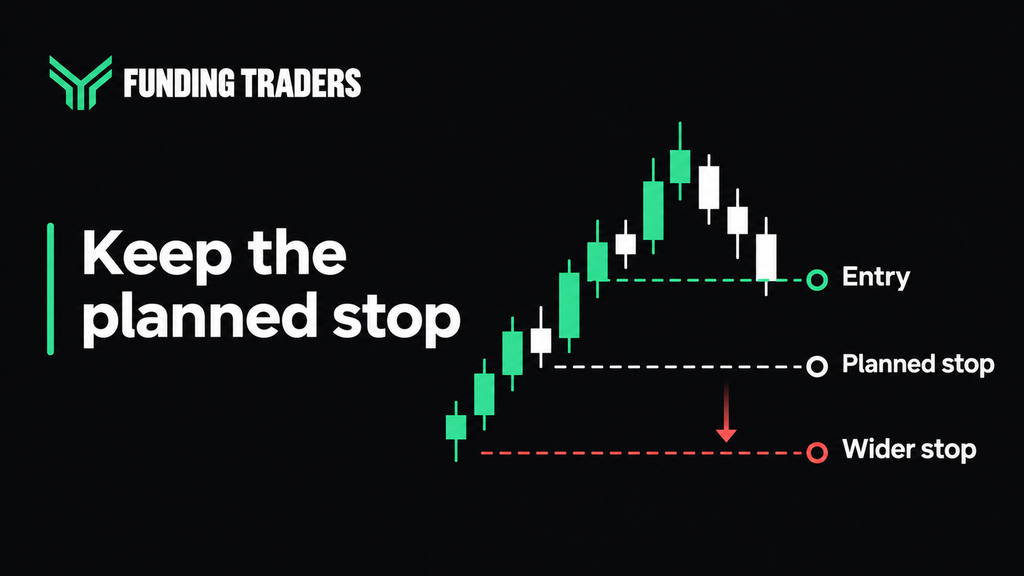
At the same position size, the distance between the entry and stop determines the planned price loss.
Fix the order, then keep a record of it. Save the entry, original stop and size before the trade. For a long position, flag any edit that lowers the stop. For a short, flag any edit that raises it. A wider stop may make sense for a future entry with a smaller size. On an existing ticket, keep the planned exit when the reason for the trade has failed. A trailing adjustment that reduces exposure fits a different purpose and should have its own written trigger.
3. You count pairs and miss the shared currency
A long EUR/USD trade buys euros and sells dollars. A long GBP/USD trade buys pounds and also sells dollars. A broad dollar rally can hurt both positions at once, even if the chart patterns looked different when you entered. The euro and pound can also move independently. You can spot the common exposure without guessing a correlation coefficient.
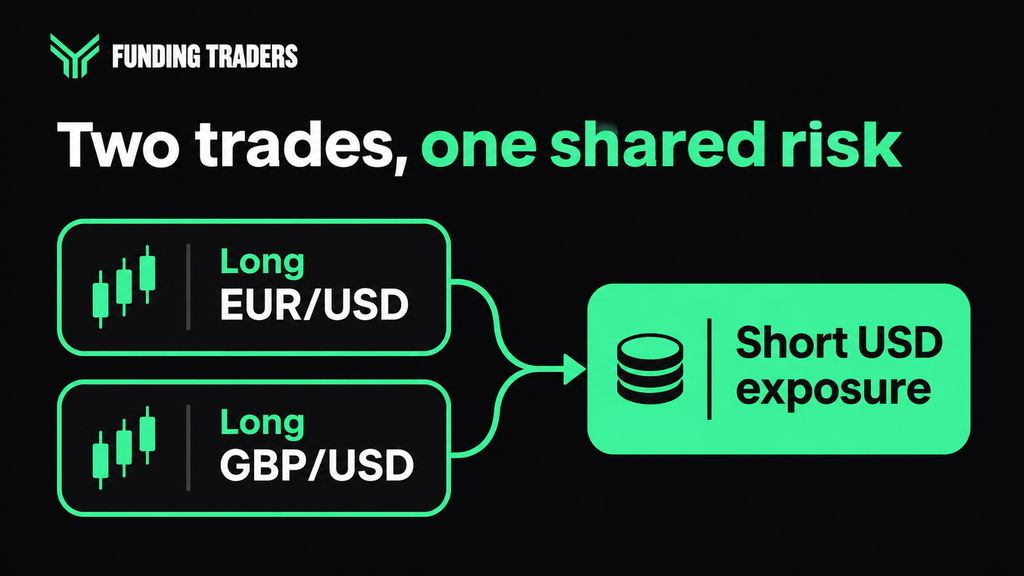
Put a dollar amount on the overlap. Suppose your personal budget for one dollar-weakness view is $100 before costs. Your open EUR/USD order risks $60 to its stop. A proposed GBP/USD order adds $70, taking the combined planned loss to $130 if both stops fill as expected. Trim the second trade to $40 of price risk or pass on it. Leave room separately for costs and adverse fills.
This check serves your own risk decisions. FundingTraders’ funded 2-Step Day rules group trades in the same symbol and direction under specified timing conditions. Different symbols can count as separate trade ideas under those rules while still losing money on the same currency move.

4. Your next order is sized to win the last loss back
Look at the order immediately after a stop-out. Did its setup exist before the first trade closed? Did you raise the size, shorten the wait for confirmation or switch pairs solely because one was moving? The elapsed time is a clue. The reason for the entry tells you more.
Pause before sending another order. Cancel any unsubmitted ticket, write down the previous fill and step away from the order screen. When you return, ask whether you would still take the setup at your usual risk if the last trade had broken even. Name the fresh trigger and calculate the loss at the new stop. If you cannot do both, skip the entry. If your personal session limit has been reached, end the session.
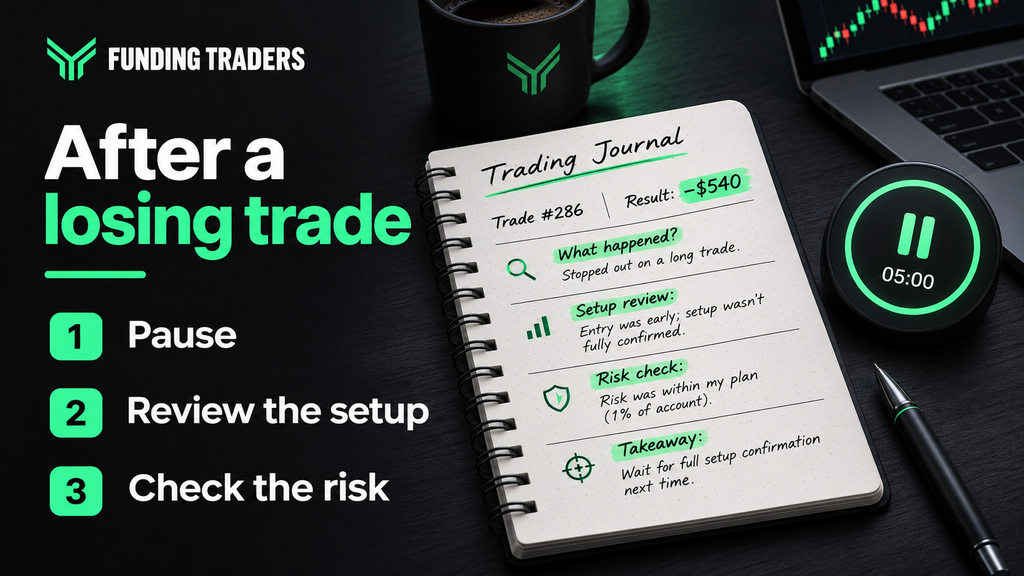
A pause also gives you a chance to notice a quieter form of revenge trading. The lot size might be unchanged, yet three quick entries on the same idea can commit more money than the first ticket did. Review the sequence together.
5. Your journal records the outcome and loses the explanation
A statement can tell you how much you lost. To diagnose recurring forex risk management mistakes, you also need the decision made before the result was known. Take one closed ticket and line up its planned risk and net result in the same account currency.
| Journal entry | Example from a closed EUR/USD long |
|---|---|
| Original risk | $100 of price risk, 20 pips at $5 per pip |
| Order history | Original stop stayed in place |
| Closing fill | 2 pips beyond the planned stop, adding $10 |
| Trading costs | $5 commission in this example |
| Net result | $115 loss, or -1.15R when the initial $100 is 1R |
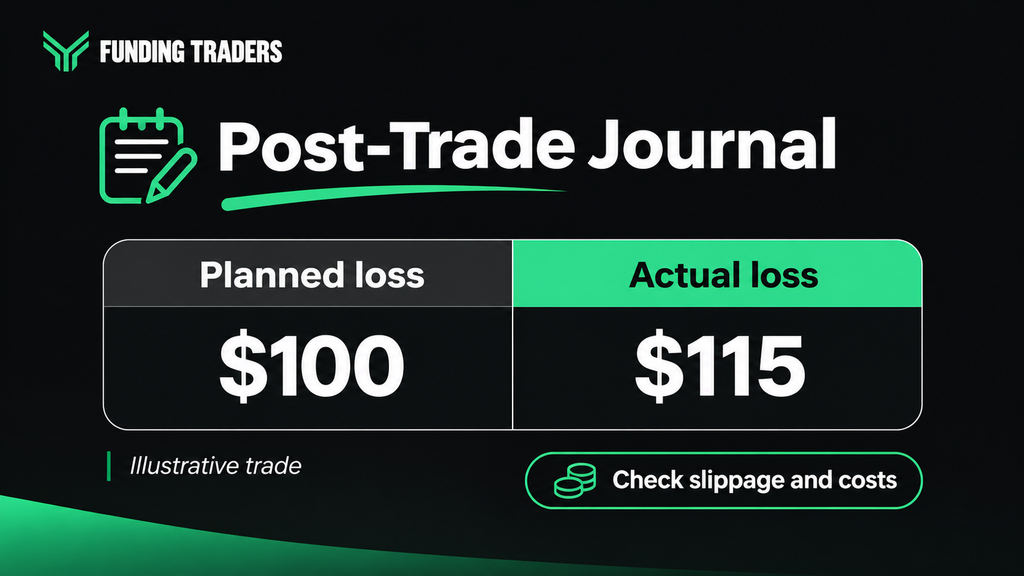
Reconcile the difference. Here the extra $15 came from the fill and commission. Changing the stop rule would miss the cause. For the next estimate, allow for those costs and review fills around similar trading conditions. On another ticket, the statement might show a fill at an edited stop. That calls for an order-discipline check. Keep the original risk figure in the log even when the result looks better against a revised figure.
At the end of the week, group tickets by the cause you can verify, including ones that followed the rules and lost the expected amount. Pick one repeat error and a change you can check on the next trade. A run of wider stops calls for recording every edit. A cluster of back-to-back entries calls for checking the fresh setup before reopening.
Questions about forex risk management mistakes
How do I tell a trading mistake from a normal loss?
Compare the original ticket, the setup you recorded and the execution report. A loss at the intended size and exit can fit your approach. A winning trade with a widened stop still records a decision to take extra risk.
Can the same lot size risk different amounts?
Yes. Within the same pair and account currency, a greater distance to the stop increases the price risk at unchanged volume. Across different pairs, the value of a pip in your account currency can also change.
Does every fast re-entry count as revenge trading?
A fresh signal can appear shortly after a loss. Record the trigger, the reason for the size and the room left in your budget. If the only reason to enter is to recover a particular dollar amount, step away.
What should I log first if I only have a minute?
Save the original entry, size, stop and planned dollar risk before submitting. After the trade, add the actual fill, charges and net result. You can then revisit the record without relying on memory.
Start with one closed ticket
You can investigate all five forex risk management mistakes from one starting point. Pick a recent loss, recover the original order and follow the changes through to the fill. Then check the overlapping positions and the next entry. Before your next session, write one correction you can verify in the order history.

Disclaimer: Trading involves significant risk and is not suitable for every investor. Past performance is not indicative of future results. The information provided in this article is for educational and informational purposes only and should not be considered financial, investment, or trading advice. All account rules, payout structures, profit splits, and promotional offers described in this article are subject to change at the discretion of FundingTraders. Promo codes may expire or be modified without prior notice. Always trade responsibly and only risk what you can afford to lose.